
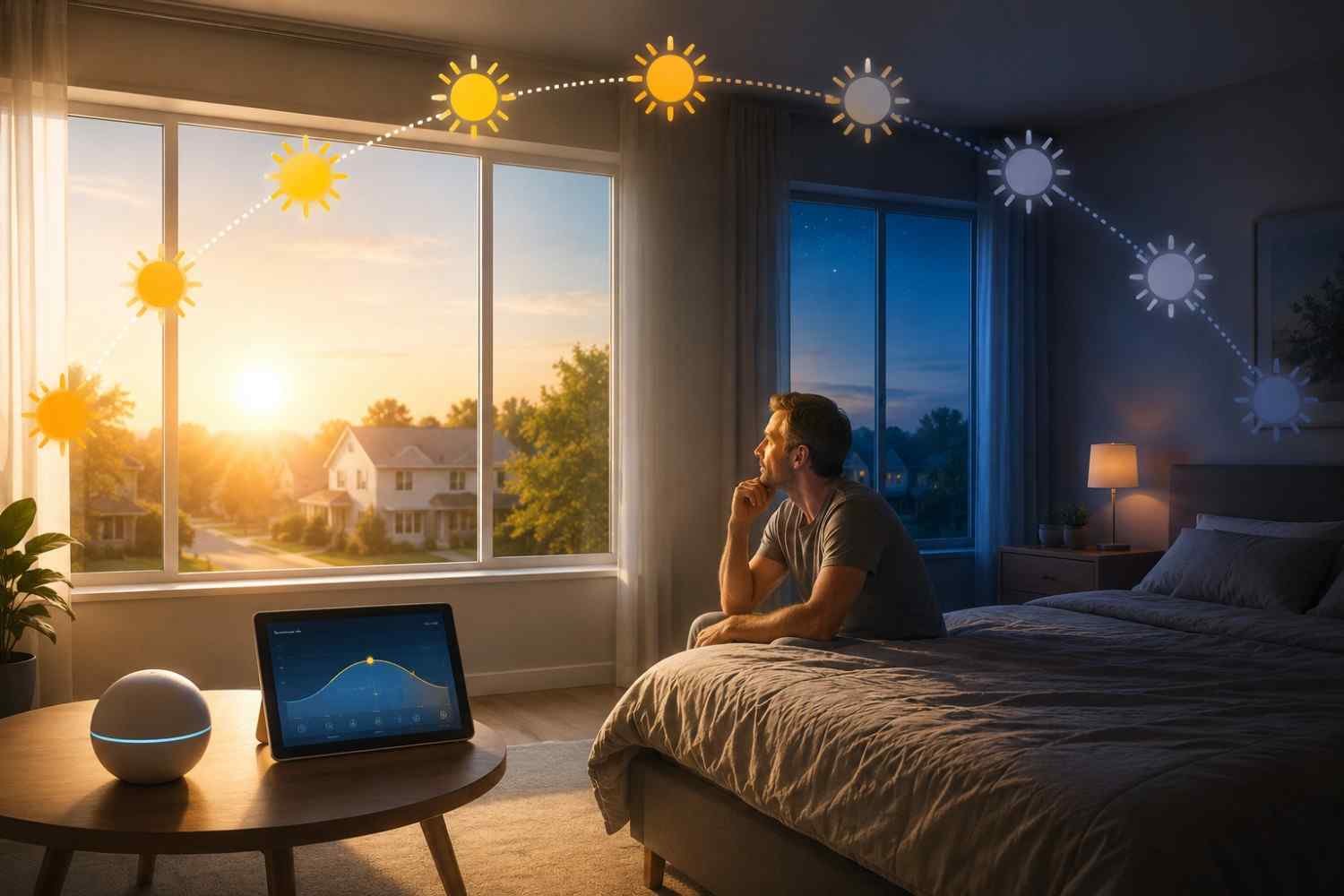
We spend billions of dollars every year trying to optimize our sleep. We buy high-tech mattresses, white noise machines, sleep trackers, and expensive supplements. Yet, many of us still wake up feeling groggy, staring at the ceiling in the middle of the night, wondering what went wrong.
The missing puzzle piece isn’t something you can buy online. It is the sun. For millions of years, human biology evolved to sync perfectly with the solar cycle. When our indoor spaces ignore that cycle, our bodies pay the price. High-end residential designers have a powerful secret: they don’t just build bedrooms; they map them to the exact path of the sun. By tracking solar movement, you can align your home with your biology and unlock the best sleep of your life.
1. Sync Your Bedroom with the Circadian Rhythm

Your body runs on an internal 24-hour clock known as the circadian rhythm. This rhythm dictates when your brain releases cortisol to wake you up and melatonin to help you wind down. The primary master switch that resets this clock every single day is light exposure.
Architects use solar mapping to ensure your bedroom receives the right type of light at the right time. Ideally, a bedroom should face east or southeast. This positioning allows the soft, morning sun to flood your room naturally, signaling your brain to stop producing melatonin and start your day without a jarring alarm clock.
2. Leverage Solar Orientation in Your Floor Plan
When building or renovating a home, mapping out the solar path across your property is critical. The angle of the sun changes dramatically between the summer solstice and the winter solstice. A bedroom that feels perfect in June might become an icy dark cavern by December if it isn’t oriented correctly.
Achieving this perfect balance requires looking at the raw geography of your lot. Working closely with highly specialized custom home architects in Salt Lake City, UT ensures that your home’s layout is engineered around these local solar angles. By optimizing passive solar orientation, you can place your sleeping quarters exactly where they will capture the gentle morning light while staying shielded from the brutal, overheating rays of the late afternoon western sun.
3. Ban the Western Sun from Your Sleeping Space

If an eastern orientation is the holy grail for sleep design, a western-facing bedroom is often a recipe for insomnia. The western sun hits its peak intensity during the late afternoon and early evening, pouring massive amounts of heat and blinding light directly into the room right before you want to sleep.
When a bedroom bakes in the afternoon sun, the walls, furniture, and mattress absorb that thermal energy. Your body temperature needs to drop slightly to initiate deep sleep. A room that has been heated by the western sun all afternoon forces your air conditioner to work overtime and keeps your core body temperature too high for restful slumber.
4. Master Dynamic Light Control Strategies
Of course, we cannot always completely control which way our windows face, especially in existing homes or urban environments. When the structural orientation isn’t perfect, designers rely on advanced, dynamic window treatment to manually manage the solar cycle.
The trick is flexibility. You want the ability to block out light completely when it is time to sleep, but invite it in during the day. Installing high-quality, motorized blackout window treatments allows you to program your blinds to open automatically at sunrise. This prevents artificial light pollution from streetlamps from disrupting your night while still letting you wake up to natural solar cues. These systems can also be especially valuable when planning how to prepare for summer months ahead, helping manage longer daylight hours and increased solar heat gain more effectively.
5. Design for Twilight Mind-Down Rituals
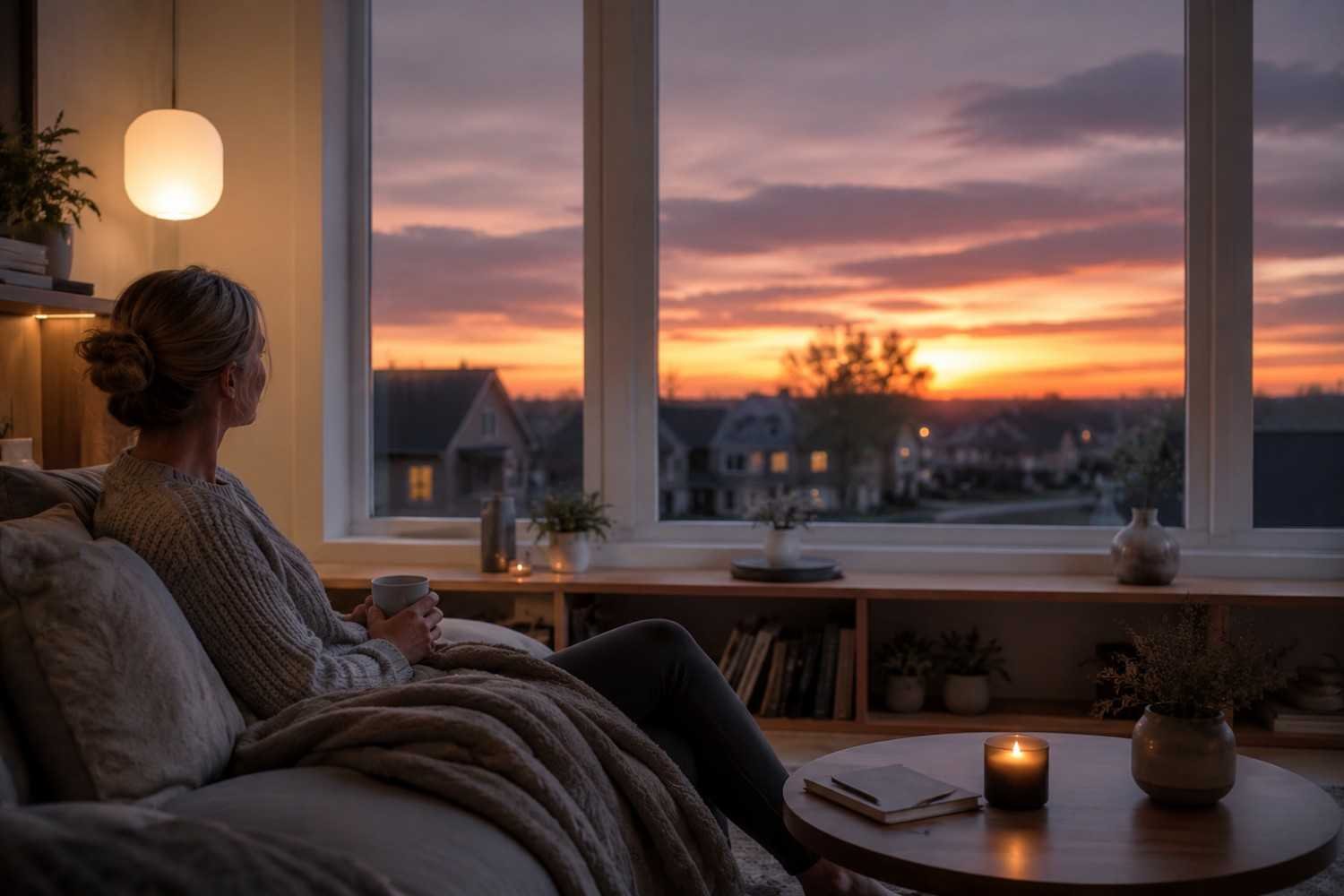
The hours leading up to bedtime are just as important as the time spent with your eyes closed. If you spend your evening under harsh, bright fluorescent overhead lighting, you trick your brain into thinking it is high noon.
To counteract this, designers create a separate visual transition zone for the evening. By placing your living spaces or a cozy reading nook on the western or southwestern side of your home, you can watch the sunset. Experiencing the natural shift from golden hour to twilight triggers the natural production of melatonin, smoothly transitioning your mind into sleep mode long before your head hits the pillow.
Conclusion
The ultimate designer secret to better sleep is understanding that your home is not an isolated box—it is an environment that interacts constantly with the natural world. By tracking the sun and intentionally placing your bedroom in harmony with its daily path, you give your body the exact biological cues it craves. Designing your home around light isn’t a luxury; it is a fundamental pillar of long-term health and well-being. When you stop fighting the natural cycle of the sun and start embracing it, your bedroom transforms from a simple room into a powerful sanctuary for deep, restorative rest.