
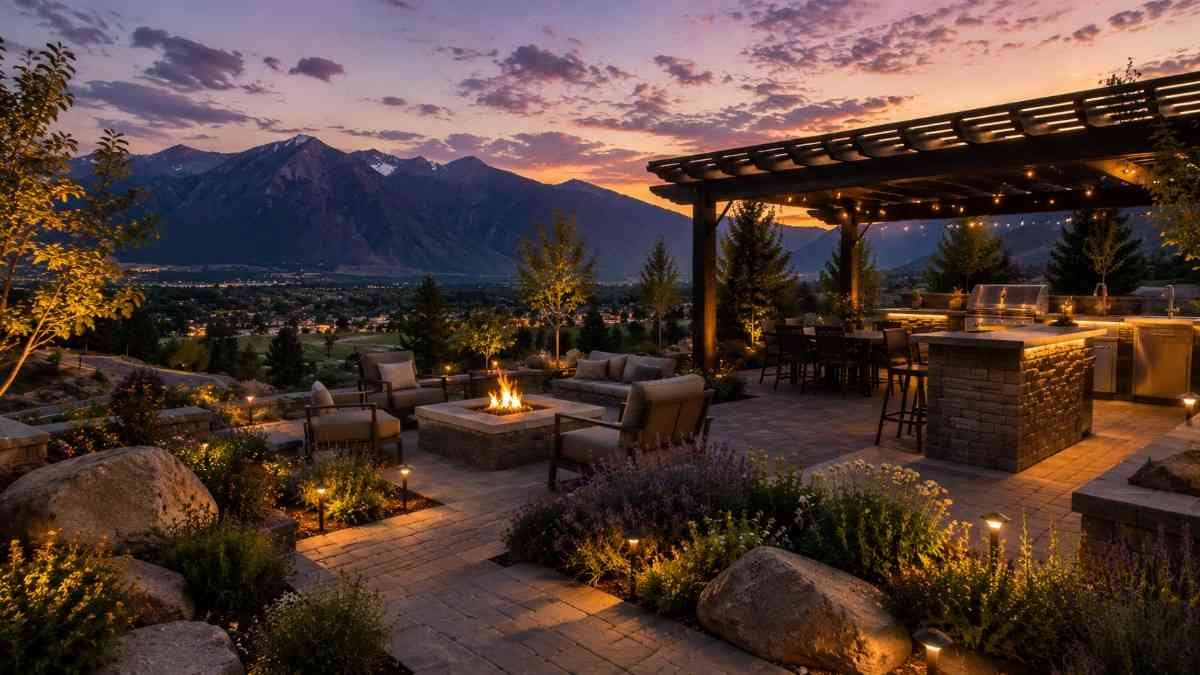
Utah landscaping is often judged too early and too narrowly. A project can look polished on day one and still fail in the first hard winter, the first irrigation imbalance, or the first season of heavy use. In Utah, design choices are not just aesthetic choices. They are structural decisions, horticultural decisions, and long-term performance decisions.
That is why the strongest outdoor spaces in this market are not built around trends alone. They are built around climate reality. The Wasatch Front brings freeze-thaw cycles, high summer heat, elevation shifts, semi-arid conditions, and soils that can behave very differently from one property to the next. A landscape that ignores those factors may still photograph well, but it will not age well.
Cottonwood Landscaping has built its reputation around that exact distinction. With more than 35 years of regional experience, the company approaches outdoor construction as a system, not a set of disconnected upgrades. That matters because the most successful landscapes in Utah are engineered to work together: grading, drainage, retaining structures, hardscaping, planting, and lighting all have to support one another.
The Real Failure Point Is Usually Not The Planting Bed
Many homeowners assume landscape problems start with plant selection. Sometimes they do, but more often the real issue begins earlier. Poor drainage, weak base preparation, and mismatched materials tend to cause the failures that people later blame on weather or plants. In Utah, that mistake gets expensive quickly.
Freeze-thaw cycles are especially unforgiving. Water that enters joints, bases, or poorly prepared soil can expand and contract repeatedly through the season. That movement stresses pavers, retaining walls, steps, patios, and edging. If the structure underneath is not built for those shifts, surface quality declines no matter how attractive the finish looked at installation.
Structural Details Matter More In Utah Than In Mild Climates
A credible landscape builder in Utah has to think like an engineer and an artist at the same time. That means excavating correctly, managing drainage before finish work begins, and selecting materials with real durability. Custom hardscaping, retaining walls, decks, and pergolas should not be treated as decorative add-ons. They are load-bearing or environment-facing components that must handle stress over time.
Cottonwood Landscaping’s design-to-build model is valuable here because it avoids the common gap between design intent and field execution. The same team responsible for the plan is also responsible for the build, which reduces the chance that a beautiful concept becomes a brittle final product.
Softscaping Only Works When The Site Is Ready For It
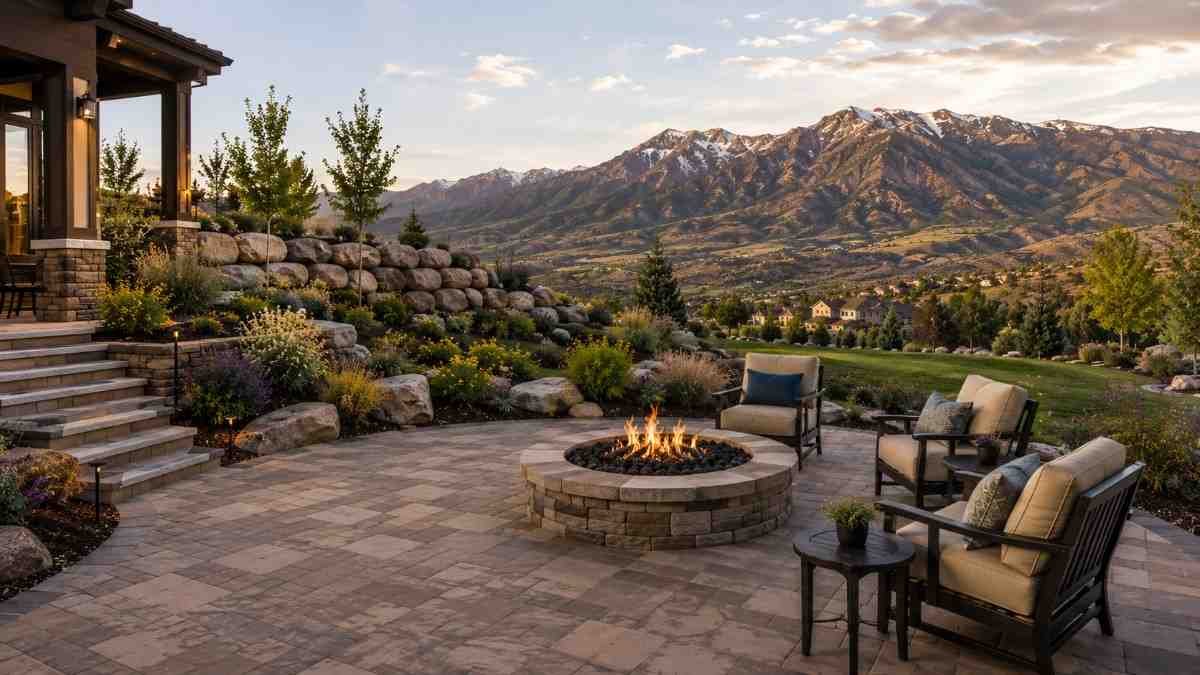
Softscaping deserves just as much seriousness as stonework or carpentry. In Utah, plant success depends on altitude, exposure, irrigation efficiency, and soil conditions. Xeriscaping can be highly effective, but only when the planting palette and water strategy are matched to the property’s microclimate.
That is where local horticultural knowledge becomes more than a nice-to-have. The right species in the wrong soil, or the right soil with the wrong irrigation pattern, still creates weak results. Good Utah landscaping starts by making the site hospitable before asking plants to perform.
What Strong Operators Build Into A Utah Landscape From Day One
The best operators do not wait for problems to show up. They design them out early. That starts with understanding that a landscape is a layered system, and every layer affects the next one.
A high-performing project typically includes:
- Proper excavation and grading to support drainage
- Material choices suited to thermal expansion and local weather
- Irrigation planning that prioritizes efficiency and coverage
- Plant palettes selected for elevation and water conditions
- Structural elements sized and placed for real-world use
- Lighting that improves safety, function, and nighttime atmosphere
These decisions are not glamorous, but they determine whether the finished space becomes an asset or a recurring repair issue. Cottonwood Landscaping works from this more disciplined framework, which is why its projects are framed around durability as much as design.
In practical terms, this means the outdoor kitchen should be positioned where plumbing, traffic flow, and exposure make sense. It means a pool house should complement the site rather than crowd it. It means a retaining wall should solve grade change intelligently, not simply occupy space. The difference shows up years later, not just at installation.
Why Utah Homeowners Need A Design-To-Build Partner, Not A String Of Separate Vendors
A landscape project becomes much harder when design, excavation, masonry, irrigation, and plant installation are handled by different teams with different incentives. Miscommunication then becomes part of the process. A plan that looks coherent on paper can fragment in the field if no one owns the whole system.
Cottonwood Landscaping’s full-service Utah landscaping model avoids that problem. By combining design, architecture, construction, and maintenance guidance within one coordinated workflow, the company reduces the friction that often leads to delays, rework, or inconsistent workmanship. That is especially useful for larger outdoor investments such as custom pools, timber pergolas, structural retaining walls, and outdoor kitchens.
The Five-Step Workflow Creates More Accountability
A transparent process matters because it gives the homeowner a clear path from concept to completion. Cottonwood Landscaping uses a structured five-step workflow: Consult, Design, Refine, Build, and Maintain. That sequence is not just administrative. It creates a disciplined rhythm for decision-making.
It also helps separate the emotional excitement of the vision from the technical reality of the site. During the consultation and design stages, assumptions can be tested. During refinement, details can be adjusted before they become expensive. And during the build phase, the work can stay aligned with the approved direction. That is how custom projects stay custom without becoming chaotic.
Why This Matters Even More In Salt Lake, Utah, And Summit Counties
Properties across Salt Lake Valley, Utah County, and Summit County can face different exposure, soil, and elevation conditions. A one-size-fits-all landscape approach is rarely persuasive in those areas. Cottonwood Landscaping’s regional experience gives it an advantage because the team is working from lived familiarity with the Wasatch Front rather than abstract generalities.
That local fluency matters when specifying plant choices, retaining solutions, irrigation systems, and surface materials. It also matters when a project needs to blend sophistication with resilience. In Utah, a premium landscape should feel tailored to the site, not imported from a climate that behaves differently.
The Best Utah Landscapes Balance Beauty, Function, And Conservation
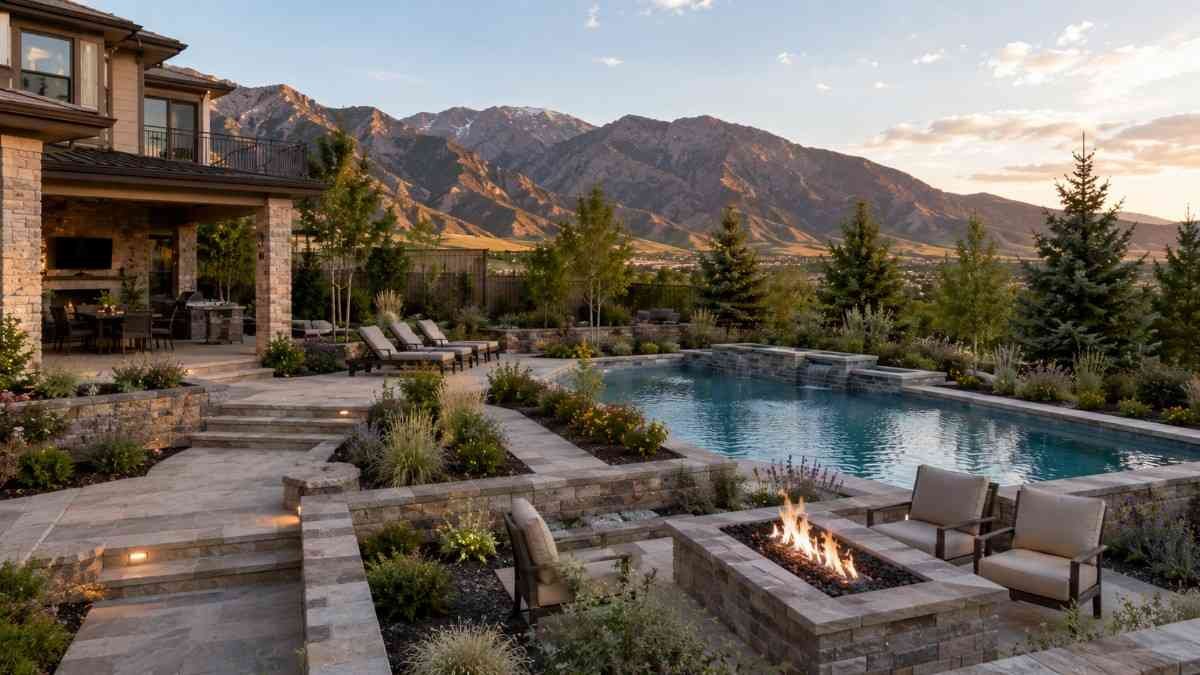
A thoughtful landscape should do more than impress from the curb and make outdoor memories last. It should support daily life. It should create usable outdoor rooms, handle seasonal change, and reduce avoidable water waste. In Utah, those goals are connected. A landscape that is easier to maintain is often the one that was designed more intelligently in the first place.
This is where xeriscaping becomes a strategic decision rather than a trend word. When done well, xeriscaping is not about making a yard look sparse or unfinished. It is about using water more intentionally while creating a landscape that still feels composed, layered, and welcoming. Paired with efficient irrigation and smart plant selection, it can deliver a durable balance of form and function.
Outdoor lighting contributes in a similar way. Low-voltage lighting does more than improve appearance after dark. It extends usability, highlights architecture, and increases safety along paths, steps, and gathering areas. A landscape that works only at noon is incomplete. A strong design considers how the property lives through the evening and across the seasons.
For homeowners comparing options, the question is not whether they want “beauty” or “performance.” In Utah, the real question is whether the design can deliver both without compromise.
What To Look For Before You Commit To A Landscape Project
Before selecting a contractor, it helps to ask whether the firm is thinking in terms of longevity or just installation. The answer often becomes visible in the questions they ask you. Do they ask about slope, drainage, exposure, and use patterns? Do they talk about freeze-thaw cycles, irrigation efficiency, and material behavior? Or do they explain how the design will support future maintenance and durability?
Those questions matter because a serious outdoor project is a long-term investment. The contractor should be able to explain how the finished environment will function, not just how it will look. That distinction is especially important for high-end projects involving pools, patios, retaining walls, and structural outdoor living spaces.
Cottonwood Landscaping fits squarely into this more rigorous category. The company’s positioning is not built around volume or generic service claims. It is built around craftsmanship, regional expertise, and a full-service process that keeps the project coherent from the first conversation through the final build details.
If you are evaluating landscaping for a property that needs to last, that is the standard worth using.
A Better Standard For Outdoor Living In Utah
The most impressive landscapes are not the ones that try hardest to look effortless. They are the ones where every visible feature has been supported by invisible discipline underneath. In Utah, that discipline is not optional. Weather, elevation, soil, water, and usage all demand it.
That is why the strongest approach is one that combines design intelligence with field execution. Cottonwood Landscaping brings that full-service perspective to projects across the region, and its work reflects a simple but important principle: outdoor spaces should be built for the place they live in, not just for the first impression they make.
For homeowners who want a landscape that feels elevated, durable, and genuinely suited to the Wasatch Front, a conversation with Cottonwood Landscaping is a sensible place to begin.