
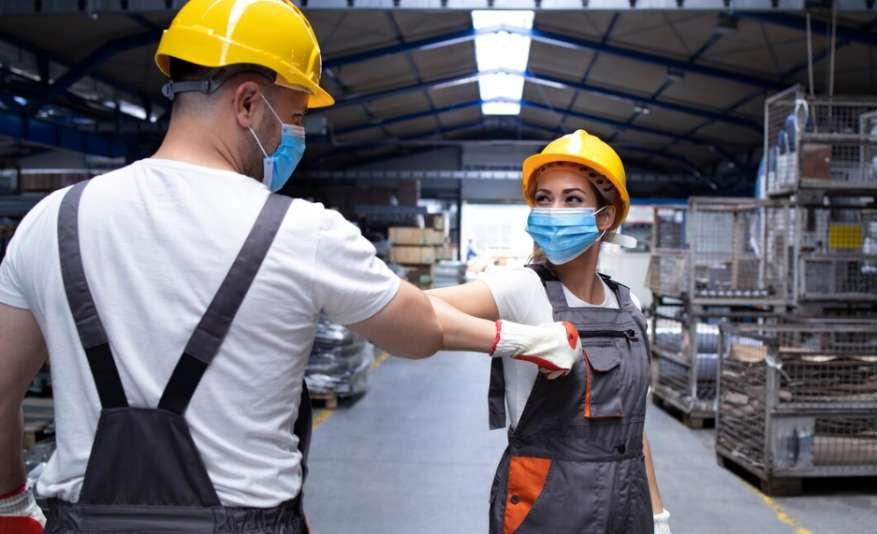
Heavy manufacturing is the backbone of modern infrastructure, yet it remains one of the most physically demanding and hazardous sectors for the global workforce.
From navigating massive automated assembly lines to handling volatile chemical processes, workers in this industry face daily risks that are significantly higher than in the service or tech sectors.
According to the U.S. Bureau of Labor Statistics, the manufacturing industry consistently reports thousands of nonfatal injuries annually, highlighting a persistent need for systemic improvement.
Safety in these environments is not merely a regulatory box to check; it is a critical component of operational efficiency and employee morale. A safe shop floor translates to fewer shutdowns, lower insurance premiums, and a workforce that feels valued and protected.
However, achieving zero incidents requires more than just high-visibility vests and safety goggles. It demands a holistic approach that combines culture, maintenance, and technology. Here are five effective strategies to elevate safety standards in heavy manufacturing.
1. Cultivate a Proactive “Stop-Work” Culture
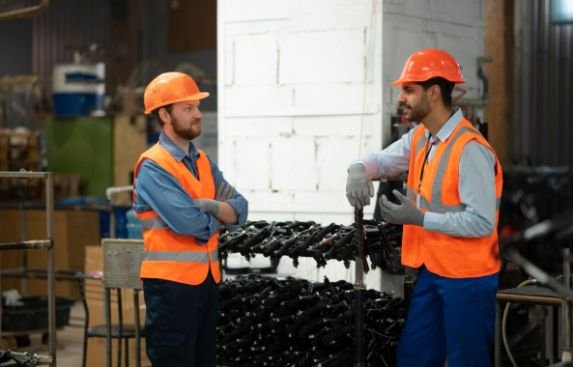
The foundation of any safe manufacturing plant is its culture. Policies in a handbook are useless if the culture on the floor discourages people from speaking up. In many high-pressure environments, there is an unspoken rule that production targets supersede caution. To combat this, leadership must actively instill a “stop-work” authority.
This means empowering every employee—from the newest apprentice to the most senior shift supervisor—to halt production immediately if they perceive an unsafe condition, without fear of retribution. This cultural shift requires consistent reinforcement.
Management should publicly praise employees who identify hazards, rather than reprimanding them for the resulting downtime. When workers realize that their safety is genuinely prioritized over speed, they become the most effective safety inspectors on the payroll.
Regular “toolbox talks” at the start of shifts can reinforce this mindset, turning safety from a corporate mandate into a shared personal value.
2. Rigorous Maintenance of Specialized Machinery
Mechanical failure is a leading cause of catastrophic accidents in heavy industry. When deadlines loom, it is tempting to delay routine maintenance, but a skipped inspection on a hydraulic press or a crane can be fatal. A robust preventative maintenance schedule is non-negotiable.
This involves predictive analytics to replace parts before they fail, rather than reacting to breakdowns. This vigilance is particularly important when dealing with niche, heavy-duty machinery where wear and tear are constant. For example, in the construction materials sector, the structural integrity of precast concrete equipment is paramount.
If these hoppers, mixers, and molds are not inspected for fatigue or hydraulic leaks, the sheer weight of the materials involved can lead to devastating crushing injuries.
Implementing a strict lockout/tagout (LOTO) procedure during these maintenance windows ensures that energy sources are isolated, protecting maintenance crews from accidental machine startups.
3. Integrate Smart Technology and IoT Sensors
The Fourth Industrial Revolution (Industry 4.0) has brought about a wave of technology designed to protect workers. The Industrial Internet of Things (IIoT) offers tools that go far beyond standard PPE. Wearable technology, for instance, is transforming how managers monitor worker health and environmental hazards.
Smart helmets and vests can now detect exposure to toxic gases, monitor a worker’s heart rate for signs of heat stress, and even alert supervisors if a worker suffers a fall. Furthermore, proximity sensors can be installed on forklifts and heavy machinery to prevent collisions.
These sensors alert both the driver and the pedestrian when they are too close to one another, effectively eliminating blind spots in busy warehouses. By leveraging real-time data, safety managers can identify “near-miss” hotspots in the facility and re-engineer workflows to eliminate the risk entirely.
4. Prioritize Ergonomics to Prevent Chronic Injury
While acute accidents like falls or cuts grab the headlines, musculoskeletal disorders (MSDs) are the silent epidemic of the manufacturing world. Repetitive motion, heavy lifting, and awkward postures contribute to long-term injuries that can permanently disable skilled workers.
Improving ergonomics requires a redesign of the workstation to fit the worker, rather than forcing the worker to adapt to the machine.
This can include installing lift-assist devices for heavy loads, adjusting the height of assembly tables to prevent stooping, and rotating shifts to ensure workers aren’t performing the same repetitive motion for 12 hours straight.
Investing in anti-fatigue mats and ergonomic tools may seem like a minor expense, but it drastically reduces workers’ compensation claims related to back injuries and carpal tunnel syndrome, keeping the workforce healthy and mobile.
5. Implement Visual Management and 5S Methodology
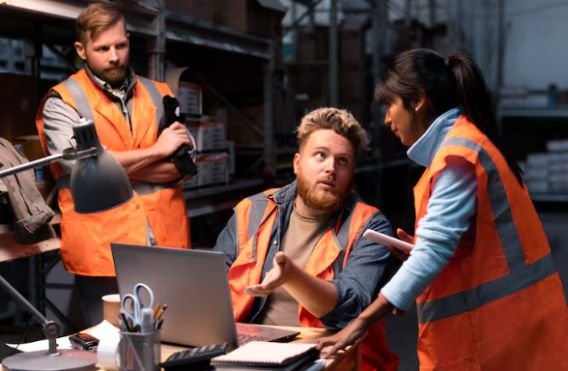
A disorganized workspace is a dangerous workspace. In heavy manufacturing, clutter can hide hazards, block emergency exits, and lead to trips and falls. Implementing the 5S methodology—Sort, Set in order, Shine, Standardize, and Sustain—creates a visually intuitive environment where safety is inherent in the layout.
Visual management uses color-coded floor markings to clearly delineate pedestrian walkways from forklift paths. It involves shadow boards for tools so that missing equipment is instantly noticed (preventing it from being left inside a machine).
When a facility is visually ordered, deviations from the standard became immediately obvious. If a spill occurs or a guard rail is missing, it stands out against the organized background, prompting immediate correction. A clean, organized factory floor signals to everyone entering that discipline and safety are taken seriously.
Conclusion
Improving workplace safety in heavy manufacturing is a continuous journey, not a destination. It requires a multifaceted approach that blends balanced lifestyle psychological safety, mechanical integrity, and technological innovation.
By fostering a culture where workers are empowered to stop unsafe work, maintaining rigorous standards for machinery, and organizing the physical space for efficiency, manufacturers can protect their most valuable asset: their people.