
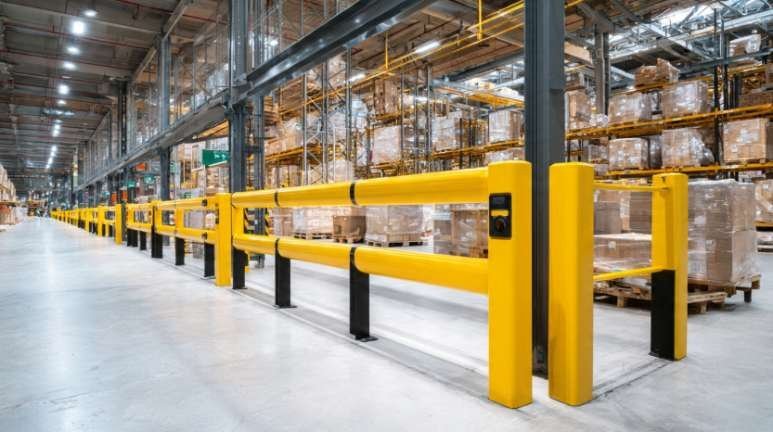
In the contemporary industrial environment, the advent of smart infrastructure is not a luxury but a business requirement. With the move by facilities to Industry 4.0, physical guarding has changed not only to be a simple iron rail but to a moving and intelligent barrier system that can be coordinated with intricate logistical processes.
These sophisticated solutions are not merely entry barriers, but an essential point of contact between human labor and automated accuracy so that safety measures can improve productivity, not retard it.
1. Resilience Engineering and High Impact Protection
The pillar of any advanced safety system is that it must be able to withstand the arduous conditions of heavy-duty environments. In contrast to the old wooden or low-grade metal fencing, high quality barrier systems are designed with high quality materials like reinforced polymers and treated steel to be able to absorb the highest energy.
By incorporating Titan Barriers into your facility design, you have guaranteed that the important infrastructure (electrical sub-stations) to automated sorting equipment will be covered by a system that is specifically created to dissipate kinetic energy. Such an impact resistance is not only capable of stopping structural damage but also reduces the risk of secondary accidents due to the displacement of debris or equipment.
2. Optimizing Logistics via Intelligent Spatial Design
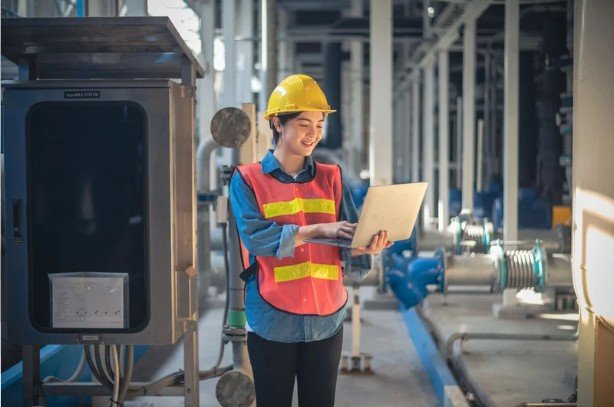
The blood of warehouse and manufacturing efficiency is operational flow. Smart barrier systems serve as the “navigational logic of a floor plan, routing the flow of materials and people with surgical precision. Facilities can literally eradicate the bottlenecks of unorganized floor space by isolating areas to control traffic flows.
Advanced Routing and Secure Access Control
- Autonomous Vehicle Routing: Obstacles establish consistent, dependable routes to autopilot vehicles (AGVs) and AMRs (Autonomous Mobile Robots), avoiding expensive sensor jamming or crashes with human employees.
- High-Density Storage Zoning: The opportunity to store high-volume inventory close to the transit lanes safely and without the danger of spilling the product into the pedestrian areas is made possible by physical partitions.
- Access Control Synchronization: New systems may be incorporated with electronic gates which do not open until certain safety parameters are fulfilled to ensure an uninterrupted, but secure transition between zones.
3. Kinetic Energy Absorption Enhancing Occupational Health
The physical health of a workforce is usually directly related to the quality of the safety gear around them. The high-performance barriers are created considering the deflection technology that enables the barrier to bend a little when hit and then resume its former shape.
This feature is important to safeguard the operators of forklifts and reach trucks; the barrier absorbs the impact of a collision thereby decreasing the physical jerk experienced by the operator of the truck and thus preventing musculoskeletal injuries.
This preventive system to occupational health guarantees that the small mistakes in operation do not lead to medical liability and loss of working days.
4. IoT Monitoring and Data-Driven Safety Systems
The smart component of contemporary barriers typically consists of the use of IoT (Internet of Things) sensors and visual signals. These systems offer a platform of communication that is beyond mere physical barrier.
Real-Time Hazard Detection and Visual Signaling
- Impact Sensing Technology: Built-in sensors can notify the maintenance personnel as soon as a barrier is hit, and both the barrier and car can be inspected instantly.
- Lighted Warning Lights: Barriers with dynamic lighting can be used, and blink or change color when a vehicle is nearing a blind corner to offer intuitive warning to pedestrians.
- Integrated Safety Signage: Modular barrier caps may be equipped with digital displays or standardized safety symbols to give real-time instructions to the staff, and make communications centralized at the location of hazard.
5. Sustainable Infrastructure and Long-Term Value Optimization
One of the main issues of any facility manager is long-term financial viability. Premium barrier systems also cut down the total cost of ownership by dramatically lowering the maintenance and replacement cost.
Traditional barriers have to be repainted with a high frequency because of the chip or rust, and they have to be substituted altogether after a major impact. However, the current intelligent systems are made of self-colored materials and modules.
This is to say that when a section is damaged all that is required is to replace that particular rail, as opposed to the whole run. This emphasis on industrial reliability would guarantee that the plant will be in compliance and aesthetically professional over decades with minimum intervention.
6. Modular Flexibility Supporting Evolving Production Needs
Being flexible is a competitive edge in a period when production lines have to expand or change direction fast. Modular barrier systems can undergo on-the-fly reconfigurations that could not be made with welded, permanent fixtures.
Scalable Components for Dynamic Industrial Workflows
- Tool-Free Adjustability: Tool-free adjustability is a feature of many high-end systems which permit internal teams to make sections move or extend without having to hire expert contractors.
- Temporary Hazard Guarding: Modular Hazard Guards are free-standing, yet high strength, and can be installed around maintenance projects or temporary machinery installations in a few minutes.
- Scalability Future-Proof: Modular barriers can be expanded as needed, allowing safety coverage to keep up with business growth.
Promoting Safety Accountability and Professional Culture
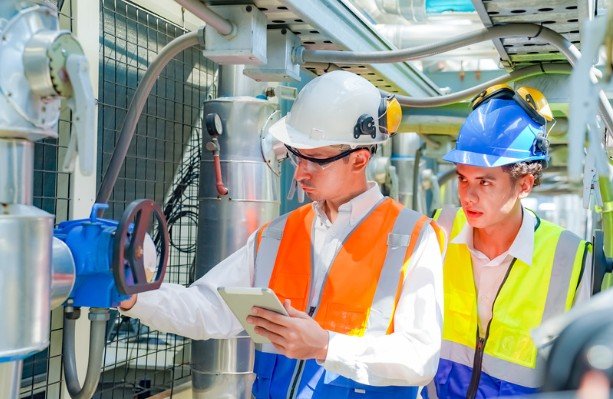
Psychological impact of high quality and well-maintained safety infrastructure is enormous on a workforce. It is an indication of management dedication to quality and excellence.
In a setting where safety is observed to be taken seriously by the top-quality of equipment, employees are more likely to adhere to internal policies and take better care of their own equipment.
This transition of a reactive to a proactive approach towards safety is the ultimate aim of any operational leader as it results in the reduction of accidents, an increase in morale, and more disciplined approach to daily work.
Balancing Structural Integrity with Modern Design
The last process in streamlining a facility is the realization that both safety and beauty could coexist. It is not just a safety standard that the floor is clean, well ordered, and marked brightly, but a good indication of a world-class operation.
When selecting a solution like Titan Barriers, which is among the leading of its kind in the industry, organizations can find the ideal compromise between high-visibility of hazard awareness and physical strength that can be both very high and guarantees that the workplace is secure as well as highly productive.
It is an investment in better quality barrier systems that will offer a safer future with businesses concentrating on growth as their most valuable assets, their people and their equipment, will be secured against the natural dangers of a busy industrial setting.
When designing a facility for optimal safety and efficiency, it’s crucial to take a step back and assess all the necessary elements. Much like what you need before launching a business, integrating smart barrier systems requires careful planning, consideration of long-term goals, and the right investments. By understanding what your facility truly needs, you can implement systems that not only enhance safety but also streamline your operational flow.