

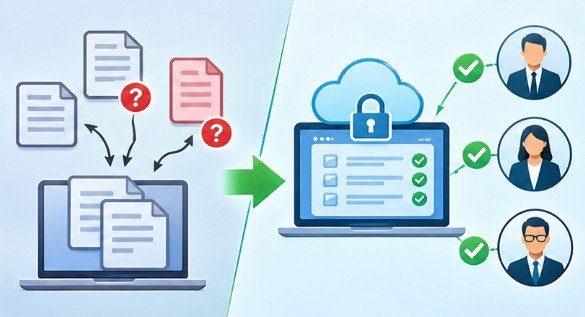
Fourteen hours. That’s how long a mid-market acquisition negotiation stalled last spring because nobody could prove which version of a purchase agreement the buyer’s counsel had actually opened. The seller’s lawyer had the file in an email thread. The buyer’s analyst had a different copy in a shared drive. Both were confident. Both were wrong.
That scenario plays out constantly in cross-border deals, where teams sit in three time zones and speak four languages. The fix most deal teams reach for now is a cloud deal room, and understanding what vdrとは means in plain terms is the first step toward running diligence without the version-control chaos. A virtual data room is a secured online repository where confidential documents are shared with selected parties, access is logged, and every page view can be traced.
This piece is for the operator, not the textbook reader. You’ll get a working model for when a deal room earns its cost, how cross-border diligence differs from domestic work, and the checkpoints I’d insist on before signing a vendor contract.
Why the cloud deal room quietly replaced the locked conference room
The physical data room used to be the standard. Binders on a table, a security guard, scheduled appointments. It worked when both sides of a deal lived in the same city and could afford a week of on-site review. It collapses the moment a buyer’s diligence team is in Singapore and the seller’s finance lead is in Frankfurt. This reflects what efficient businesses do differently to streamline operations.
Cloud deal rooms solved the geography problem first and the accountability problem second. Geography was easy. Accountability was the real prize. Every permission change, every download, every page-level view lands in a log that a general counsel can pull when a dispute surfaces. Try reproducing that with a shared folder and a vague promise to be careful.
Regulators have pushed in the same direction. The Federal Trade Commission reviews merger filings and routinely demands documentary evidence of how parties handled sensitive competitive information during a deal. A platform that timestamps every access request turns that request from a scramble into an export.
What cross-border diligence demands that domestic deals don’t
I’d argue the border itself isn’t the hard part. Language, data residency, and legal convention are.
Take language. A Japanese buyer reviewing a German target’s contracts needs either bilingual indexing or a translation workflow baked into the review process. If your deal room can’t tag documents by language, your team burns hours building a separate index in a spreadsheet. I’ve watched this happen, and it’s always the same story: the index gets stale by week two and the diligence tracker starts contradicting itself.
Data residency is the next trap. Some jurisdictions require that records of certain regulated activities stay within national borders. Before you sign, ask the vendor where the servers sit, whether data can be pinned to a specific country, and how deletion works at close. Get the answers in writing. A sales rep’s verbal assurance is not a compliance artifact.
Legal convention rounds it out. What counts as a binding signature in one country may not in another, and diligence logs sometimes need to be certified for use in a later dispute. Ask your counsel which records need exportable certification before you choose the platform, not after.
The Dealmaker’s Five-Gate Test
Here’s the framework I use before recommending any deal room. Five gates, in order. Fail any one and you walk.
- Gate one: the access map. Can you define roles by document folder, not just by user? Granularity is the whole game.
- Gate two: the audit trail. Can you pull a clean, human-readable log per user, per page, per timestamp?
- Gate three: the language layer. Does the platform index and tag by source language?
- Gate four: the residency proof. Is the data location documented in the contract?
- Gate five: the exit plan. What happens to every file when the deal closes or dies?
Gate five is the one everybody skips and everybody regrets. I’ve sat in a post-close debrief where the team spent three weeks untangling who retained access to a terminated deal’s documents. The contract hadn’t specified deletion. Nobody owned the cleanup. That’s an avoidable mess, and it starts with a single paragraph in the vendor agreement.
A concrete scenario worth stealing
Picture a $40 million acquisition where the seller is a family-owned manufacturer in Osaka and the buyer is a private equity fund based in Chicago. The seller’s team has two finance staff. The buyer brings a diligence crew of nine.
Without a deal room, the buyer’s analysts email the same request three times because nobody knows who already has the file. The seller’s controller spends her week answering the same question in different words. Nobody has proof of what was shared, and the closing checklist keeps slipping. Better diligence communication also shows why customer experience should match your marketing promises.
With a properly scoped deal room, the access map puts the nine buyer reviewers into two role groups. The seller’s controller uploads each document once and watches the view log to see which analyst is stuck. The Q&A module captures every question in writing, so the same query doesn’t get answered twice. Closing slips less. I’ve seen the difference firsthand, and it’s not subtle.
Security baselines you should demand, not negotiate
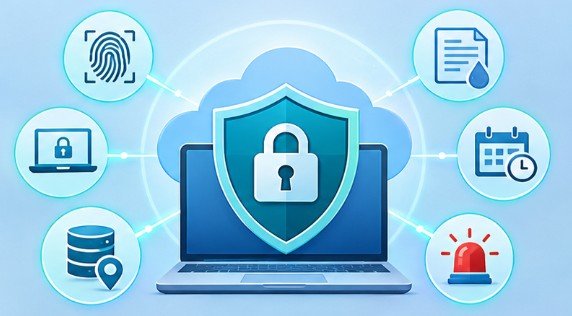
Don’t let a vendor talk you into treating these as premium features. They’re table stakes.
The National Institute of Standards and Technology publishes a widely used cybersecurity framework that names identity verification, access control, and audit logging as core controls. Ask the vendor to map its platform to that framework in writing. Any serious provider has done this already and will hand you the mapping without a fuss. A provider that hesitates is telling you something.
Encryption at rest and in transit, multi-factor authentication for every user, and dynamic watermarking on every downloaded document are baseline expectations. So is a documented incident response process. Ask what happens in the first hour of a suspected breach. If the answer involves the word “probably,” walk.
The question most buyers never ask
Most teams compare features. I’d compare the exit clause.
When the deal closes, does the vendor hand back every file in standard formats, or does it leave you with a proprietary archive that requires a paid plan to open? That single clause determines whether you walk away with your records or rent them for another year. Read it twice. Then read it again with counsel.
Cross-border deals won’t get simpler. The teams that win are the ones that treat the deal room as the operating system for diligence, not as a folder with a login screen. Start with the access map, get the residency proof in writing, and check the exit clause before anything else.
What’s your current process for proving who saw which document, on which date, in a deal you closed six months ago? If you can’t answer that in under a minute, you’ve found the next thing to fix.