
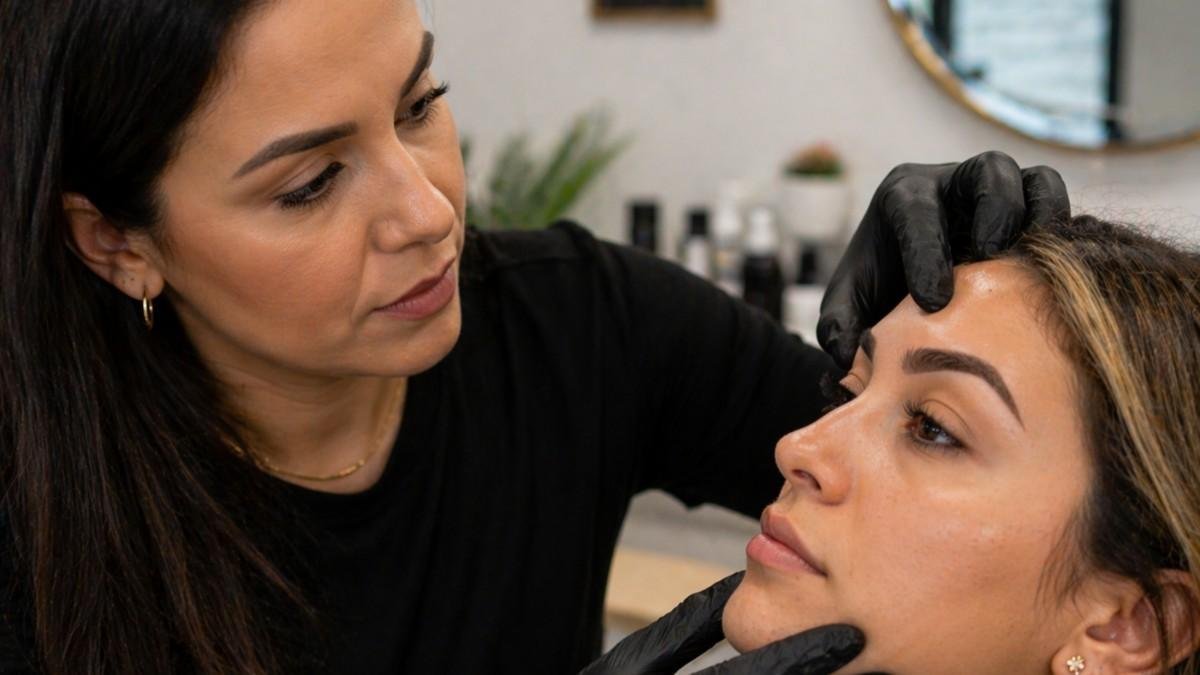
Most people research brow procedures by looking at photos. Photos show the result. They don’t show the skin type, the healing process, the aftercare routine, or the artist decisions that produced it. Getting past the photos and into the substance of what the process involves is what leads to a result you’ll actually be satisfied with.
Why the Same Procedure Produces Different Results on Different People
Semi-permanent brow procedures aren’t a single experience replicated identically across clients. The variables that affect the outcome — skin type, pigment retention, existing brow hair, face structure, and how carefully the healing process is managed — are different for every person who sits in the chair.
Oily skin tends to blur fine strokes over time because the excess sebum pushes pigment outward as it heals. Dry or mature skin retains strokes more crisply but may require different pigment depths to achieve the same visual result. Combination skin behaves differently across zones of the same brow.
An artist who accounts for those variables during assessment — rather than applying the same technique to every client regardless of skin condition — is one who understands that the procedure is only part of what produces a lasting result.
Technique Matters as Much as the Procedure Name
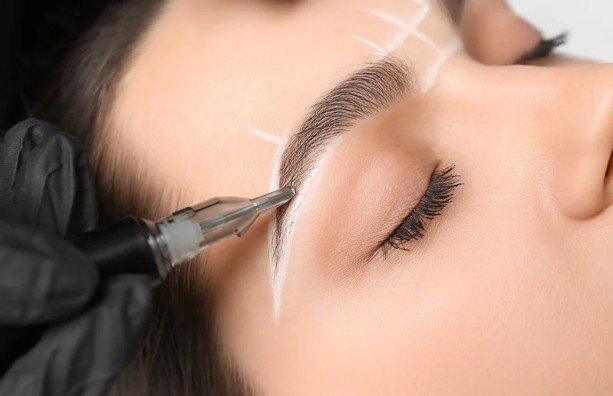
The term “microblading” has become a general shorthand for semi-permanent brow work, but the category includes several distinct techniques that produce meaningfully different results. Traditional microblading uses a manual hand tool to create hair-like strokes in the skin.
Powder and ombre brows use a machine to build a soft, filled-in effect. Combination brows blend both approaches. Nano brows use a machine with a single needle to create strokes that are finer and more durable than manual blade work on certain skin types.
The right technique for a given client depends on their skin type, their aesthetic preference. And how their skin has responded to previous cosmetic procedures if they’ve had any. An artist who offers only one technique regardless of the client’s situation is limiting the quality of the outcome before the procedure even begins.
What a Proper Consultation Looks Like
A consultation that’s worth attending does several things before anyone picks up a tool. It assesses the client’s skin — oiliness, texture, existing scarring, and any conditions that affect how pigment will be received. While reviews medical history for contraindications — certain medications, skin conditions, and medical treatments affect both eligibility and healing. It establishes what the client actually wants, not just what’s trending.
It also maps the brow shape before any commitment is made and gives the client time to review and respond to that shape before the session proceeds. Artists who move through the consultation quickly — or who treat it as a formality rather than a diagnostic step — are skipping the part of the process that prevents the most expensive mistakes.
Pigment Selection and How It Affects the Long-Term Result
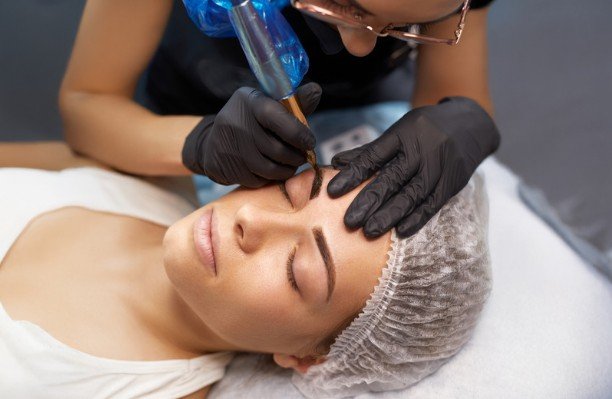
Pigment color is one of the decisions that has the longest tail. A color that matches perfectly on application day will shift as it heals. Typically lightening by thirty to forty percent and sometimes shifting in tone depending on the pigment composition and the client’s skin undertone.
Warm-toned pigments can pull orange or red on certain skin types as they age. Cool-toned pigments can shift ashy or gray. An artist who selects pigment based on how it looks in the jar rather than how it’s likely to heal on the client’s specific skin is making a decision that will still be visible two years later.
Understanding how a studio approaches pigment selection — and whether they discuss healing shifts with clients before the session — is a reasonable question to ask before booking.
Healing Expectations and the Touch-Up Appointment
The healing timeline for a semi-permanent brow procedure is longer than most clients expect. And the intermediate stages are more dramatic. In the first few days the brows appear dark, defined, and slightly swollen. Using an using an anti-aging eye serum can help reduce puffiness and promote skin healing. As the skin heals over the following two weeks, the surface exfoliates and the color appears to fade — sometimes significantly — before settling into the healed result at four to six weeks.
That healed result is what the touch-up appointment addresses. Strokes that didn’t retain pigment, areas where healing was uneven, and color adjustments that weren’t possible to make until the skin settled are all addressed at that session. Treating the touch-up as optional misunderstands its role. It’s the second half of the procedure, not an add-on.
Finding the Right Artist for Your Skin
Portfolio review is the most useful starting point for evaluating artists, but the details of what to look for matter. Healed results — photographed four to eight weeks after the procedure — show what the work actually produces. Fresh results photographed the same day look sharper and more defined than the healed outcome will be. This makes them a less reliable indicator of consistent quality.
For anyone considering microblading in Utah, the range of artists and studios available means that price alone is a poor selection criterion. Artists who publish healed portfolios, who discuss their consultation process openly, and who can explain how they adapt their technique to different skin types are demonstrating the kind of transparency that correlates with consistent outcomes across a range of clients.
Aftercare and Why It’s Not Optional
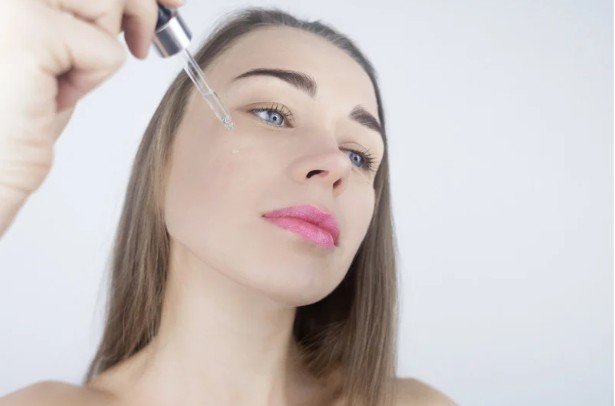
What happens in the ten days after a brow procedure has a direct effect on how much pigment the skin retains. And how evenly the result heals. Exposure to water, sweat, sun, and active skincare ingredients like retinol, acids, and exfoliants. Using these during the healing window affects the outcome in ways that can’t always be corrected at the touch-up.
Artists who provide written aftercare instructions and who explain the reasoning behind each restriction give clients what they need to protect the result. The ones who hand over a printed sheet without explanation are leaving the most controllable variable in the process up to chance.
Conclusion
A semi-permanent brow procedure done well is one of the more convenient improvements a daily routine can absorb. Until it’s done, it’s hard to appreciate how much time and effort it replaces. Getting there means choosing an artist whose process is as considered as their portfolio. And going in prepared for what the healing process actually looks like.