

Nobody really chooses a dentist. A filling cracks, the cleaning is a year overdue, and you book whoever picks up first. That is how most people end up somewhere they never quite intended to be.
Two major changes shifted the landscape this year, though: Virginia updated a key licensing rule, and national numbers on dental coverage are far worse than most assume. If you are currently searching for a reliable healthcare provider, a few critical details are worth checking first. Selecting the right falls church dentist starts with knowing what key questions to ask before booking your next visit.
What Changed in Virginia for 2026
Virginia’s Board of Dentistry made a move this year that’s easy to miss. HB 1036 and SB 282 became law on July 1, letting the Board license dental hygienists who trained and were eligible to practice outside the US. Narrow fix. But it tells you something — the state is actually responding to workforce gaps instead of just leaving the rules as they were.
What that means for you isn’t the bill itself. It’s that licensing status can move faster than a clinic’s website updates. A “licensed since 2015” badge tells you nothing about last month. Check the state’s own lookup instead.
The money side is blunter. About 27% of US adults — something like 72 million people — carry no dental insurance at all, according to the CareQuest Institute. About 21% have delayed dental treatment due to cost issues, which is a more serious problem even than medical care, prescriptions, or mental health problems, according to the Peterson-KFF Health System Tracker. Only about 40% of adults visited a dentist within the year, as per the ADA’s Health Policy Institute.
Confirm Licensing and Credentials First
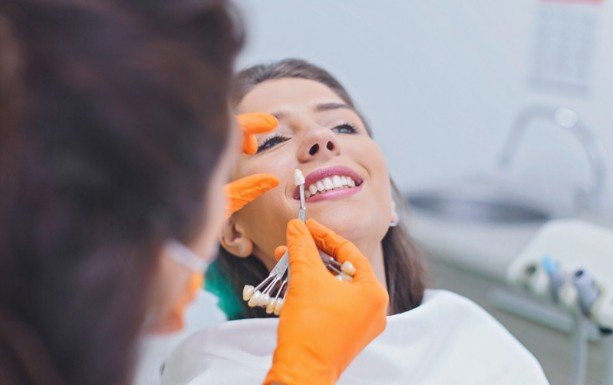
Start here. Verify the dentist is currently licensed and in good standing — Virginia’s Department of Health Professions runs an interactive lookup covering dentists, hygienists, and sedation permit holders, and it’s built to the same primary-source standard hospitals use for credentialing.
A few things worth pulling up:
- Active licensure through the state’s official lookup
- No open disciplinary actions or case decisions
- A confirmed dental degree and, if it applies, specialty certification or sedation permit
- How long the dentist has actually been practicing in Falls Church
That last one matters more than people expect. A dentist who’s worked with local families for ten years already knows your history. They catch the slow stuff — a bite shifting, gums pulling back a little more each visit — instead of starting cold every time. Offices with constant staff turnover rarely offer that, so just ask.
While you’re at it, ask who actually cleans your teeth. Some practices rotate you through whoever’s free that day, while others keep you with the same hygienist year after year. Neither approach is a red flag on its own, just as unrelated concerns like backflow problems in Salt Lake City say nothing about dental quality. Still, the setup can change how personal the whole experience feels.
Understand Your Insurance Options
Here’s where the national numbers land, broken out.
| US Dental Access Metric | Figure |
| Adults with no dental insurance | ~72 million (about 27%) |
| Adults who delayed or skipped care due to cost | ~21% |
| Working-age adults with a dental visit in the past year | ~40% |
| Cost barrier vs. medical, prescription drug, mental health care | Highest of the four |
If you’ve got employer or marketplace dental insurance, ask two things before your first visit. Is the clinic in-network? And will they bill your plan directly, or are you filing claims yourself?
Out-of-network care isn’t automatically a bad idea, but it usually means paying upfront and waiting on reimbursement — which stings a lot more on a $1,500 crown than a $90 cleaning.
No insurance? Ask about an in-house membership plan. A growing number of offices sell flat annual fees that cover exams, cleanings, and a discount on everything else. For a lot of uninsured patients, that ends up cheaper than paying full freight per visit.
Compare Services Offered

One office covering most of your family’s needs means fewer referrals, less repeat paperwork, fewer strangers looking in your kid’s mouth. Worth checking whether they offer:
- Routine exams, cleanings, digital X-rays
- Restorative work — fillings, crowns, root canals
- Same-day emergency slots for pain or trauma
- Pediatric care, if that applies
- Cosmetic or orthodontic options, if you’re thinking that far ahead
You don’t need a clinic that does everything under one roof. Plenty of people are perfectly well served by a general dentist who refers out for the specialty stuff, and honestly, that’s often cheaper than paying a specialist’s overhead for a routine filling. What actually matters is whether the office tells you upfront what stays in-house and what gets bounced elsewhere. Nobody wants to find out mid-treatment that there’s a second bill coming from someone they’ve never met.
Digital X-rays and intraoral cameras are worth asking about too. Less radiation than the old film versions, and you actually get to see what the dentist is looking at instead of taking their word for it. If dental anxiety is part of why this has been on the back burner, ask about sedation as well — some offices offer nothing beyond a calm voice and a warm blanket; others do nitrous or oral sedation for patients who need more than that to get through the door.
Read Reviews and Ask Questions
Reviews are good for spotting a pattern, not for judging one bad day. A single complaint about a long wait doesn’t mean much. A dozen people describing the same billing mess does.
Local Facebook groups tend to be more honest than star ratings — people talk more freely about how a practice handles a screaming toddler or a surprise bill when they’re not leaving a public review tied to their name. Worth a quick search outside whatever testimonials the clinic links from its own homepage.
However, the true test comes before making any appointments – a phone call. You should ask how new patient consultations are carried out. You can ask whether the dentist provides an explanation of their findings or whether they immediately proceed to the booking of an appointment. You can also ask about the situation in case you want to take a week’s time to consider the treatment.
Emergency Care and Availability
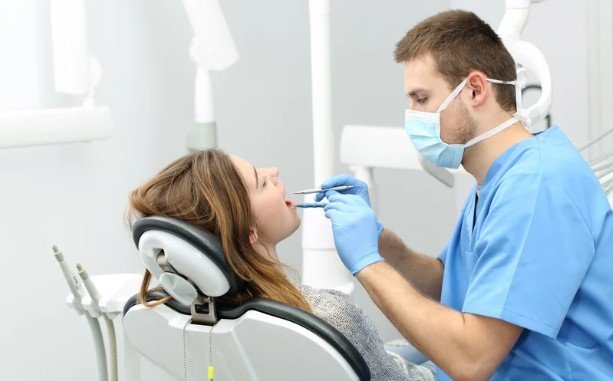
Emergencies don’t check the clock. Ask ahead of time what happens if you crack a tooth at 9 pm on a Saturday — top-tier practices will have a clear protocol to guide you, ensuring you receive timely care when you need it most.
Scheduling is important too, even if not quite so dramatic. A dedicated falls church dentist prioritizes patient wellness by keeping booking windows reasonable. That way, a quick three-month checkup stays top of mind, preventing a little cavity from ever turning into a root canal operation. When you find a clinic that makes scheduling simple and keeps emergency paths clear, you know your oral health is in good hands.
Making Your Final Decision
With the license, insurance, services, and reviews all in place, your final decision often comes down to something more difficult to make sense of on a checklist: fit. There are some patients who won’t decide until they hear all their options spelled out. Others just want a clear recommendation and to get on with their day. Neither is wrong — but a mismatch here is the most common reason people bail on a dentist within the first year, more than cost, more than location.
If routine, family-focused care close to home is what you’re after, West Broad Dental is one of the established options in the area, alongside a handful of other long-running local practices worth a look. Comparing two or three costs you one afternoon of phone calls. Skipping that step can cost you a lot more down the road.
Frequently Asked Questions
1. How do I verify that a dentist is licensed in Virginia?
Pull up the Virginia Department of Health Professions’ interactive lookup. It covers dentists, hygienists, and sedation permit holders, current and recently expired.
2. Does dental insurance cover routine cleanings fully?
Usually most of it, but the exact split depends entirely on your plan. Don’t assume — confirm your benefits and network status before you sit in the chair.
3. What should a first appointment at a new practice actually include?
A health history review, a full exam, X-rays if yours aren’t current, and a cleaning. A decent first visit also means the dentist talks through what they found before anyone books more work.
4. How much does a cleaning cost without insurance in Virginia?
It depends on the practice — federal law actually prevents dental associations from publishing standard fee data, so there’s no single number to point to. Get a written estimate, and then ask whether the cost covers X-ray images or if they are additional.
5. What is the difference between a general dentist and a specialist?
General dentistry is concerned with exams, cleaning, and filling cavities. Orthodontics or other specialists focus on specific issues, and generally, they will not be your first call.
The Perfect Dentist for You
The right dentist doesn’t always have the best website or social media presence. They’re the ones that answer a coverage question straight, explain what they find without a sales pitch attached, and treat a first visit like the start of something ongoing rather than a transaction to close.
Give it fifteen minutes before you book — check the license, check the coverage. Small step. It tends to save a lot more time than it costs.